We have been travelling full time for three years, through more than 40 countries. On one stretch we had been eating out for three months straight. We still cook a lot, we pick places with a kitchen when we can, and most weeks we still eat out two or three times.
That is where the usual calorie apps fall over. A plate of curry in a beach town has no barcode, no packet and no kitchen scale next to it. Typing it in item by item at the table is exactly when tracking used to fall apart for us. So we built the logging around talking, because that is the fastest thing you can do with a phone while your food goes cold.
How it works
1Open Fast Track on the meal
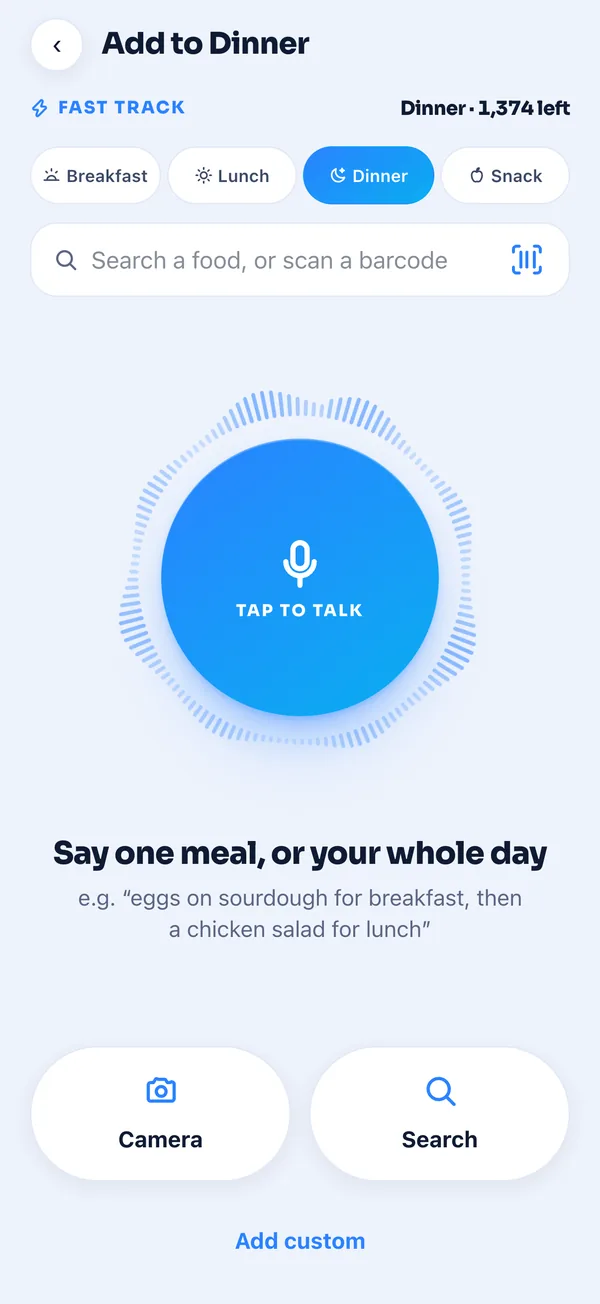
Log food opens Fast Track, set to the meal you are on. There are four ways in from one screen: the big button to talk, Camera for a photo of the plate, Search, and a barcode button in the search box for anything that came in a packet.
The screen itself suggests saying your whole day, like eggs on sourdough for breakfast and then a chicken salad for lunch. For the days you eat the same breakfast, there is a copy yesterday option and saved meals.
2Say what is on the plate
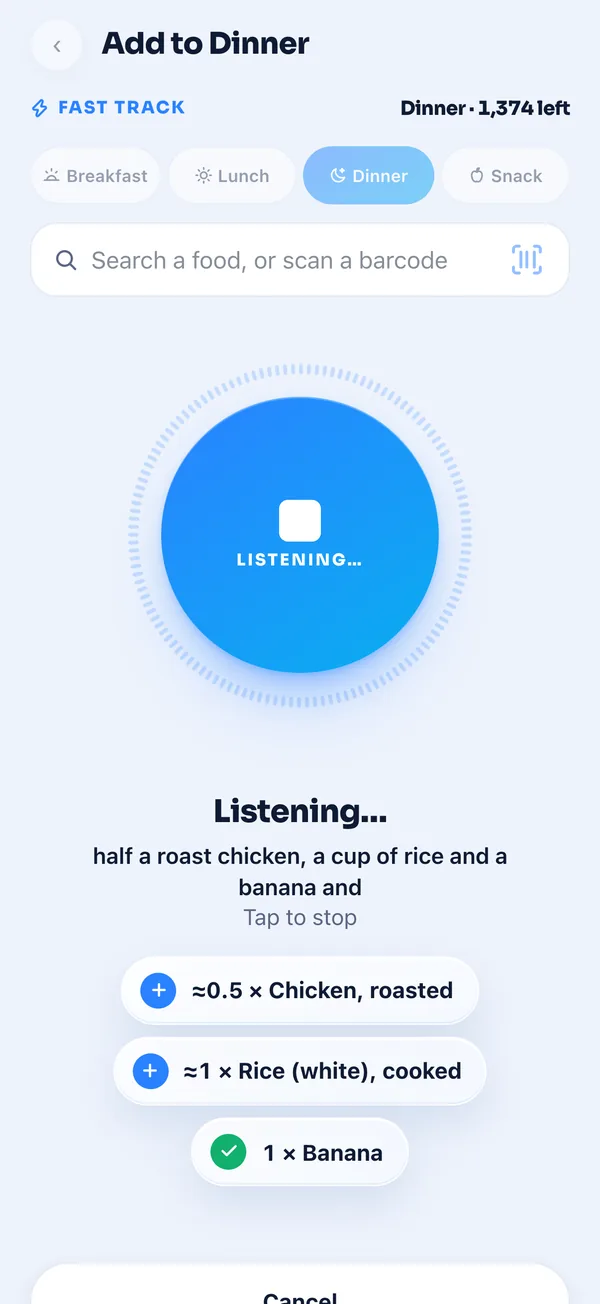
Tap the button and say it the way you would tell a friend. While you are still talking, each food turns into a chip under your words, as soon as the app has heard both the food and an amount. Here it heard half a roast chicken, a cup of rice and a banana.
On a phone that can do it, the speech is turned into text on the phone itself, which also means it works with no signal. If it cannot, it falls back to a server, and the app tells you before it sends anything.
3Check the estimates
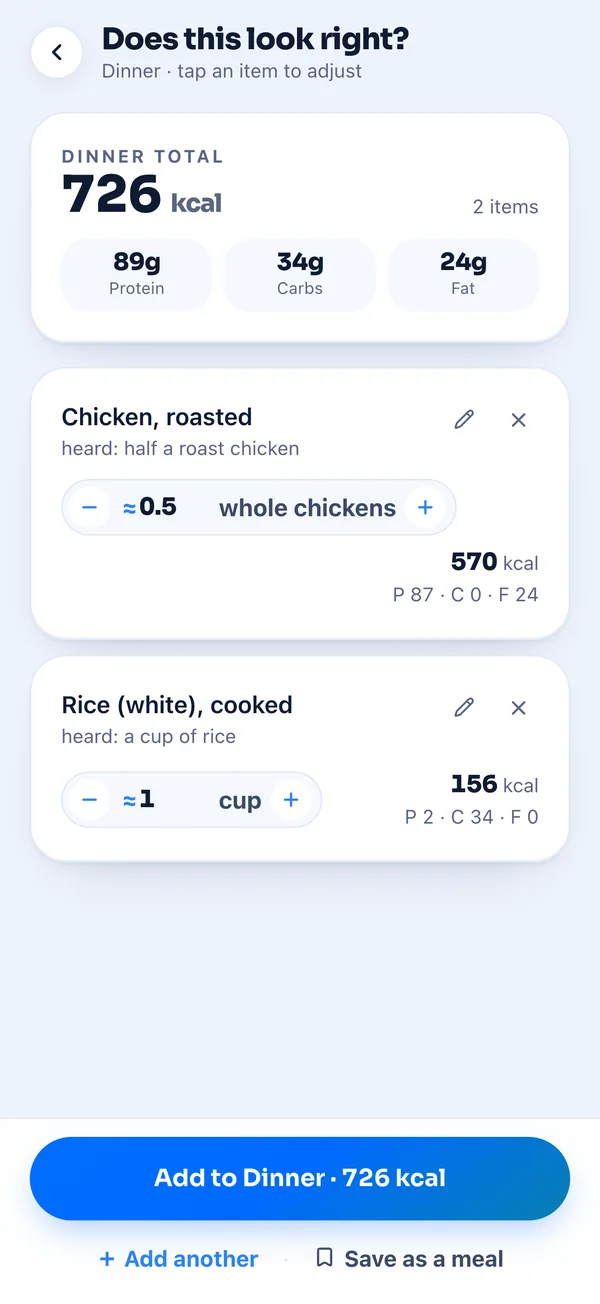
The banana had a clear amount, so it was logged straight away with an undo button in case it heard you wrong. The chicken and the rice were portions nobody weighed, so they wait in a review called Does this look right, each one showing what it heard and the amount it guessed, marked with an approximately sign.
Nudge an amount with the plus and minus, tap the pencil to edit it, or remove it. The total for the meal and its protein, carbs and fat update as you go, then one tap adds the lot. It never quietly drops a food you said. If it cannot work out what something is, it tells you.
4See the day, and the week behind it
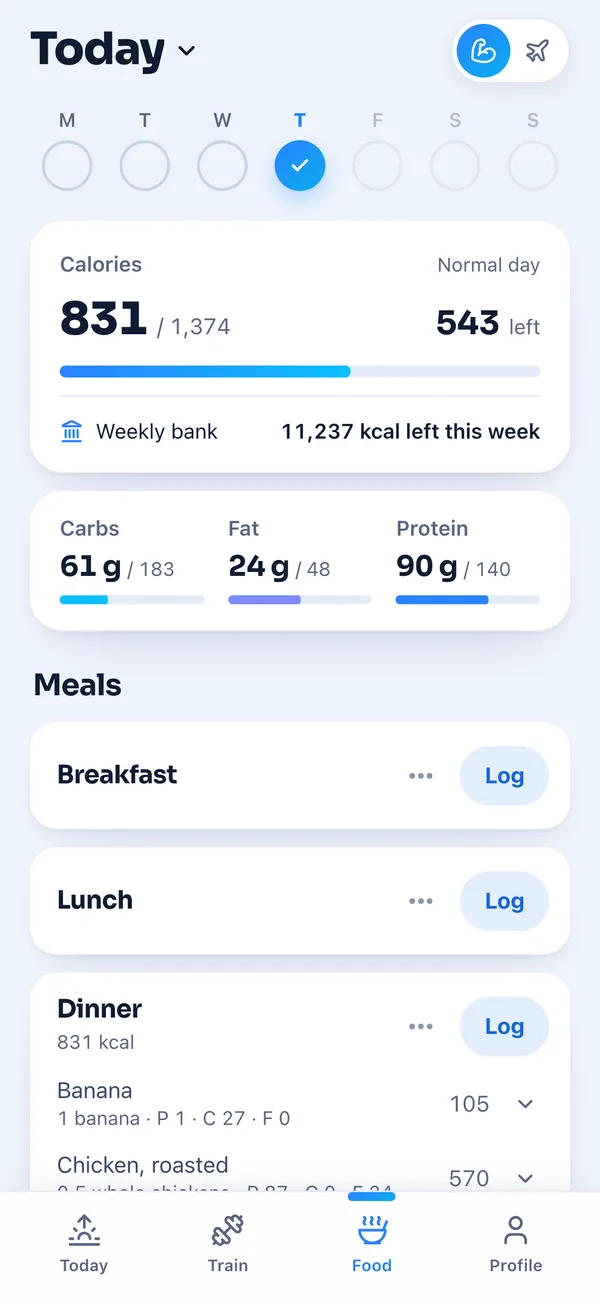
The diary shows calories left for the day, carbs, fat and protein against your targets, and each meal with what is in it. Open any row to change the amount later, an estimate keeps its mark until you do.
Under the day sits the weekly bank, what is left for the whole week. That is the part that makes eating out work for us. A big dinner is not a failed day, it comes out of the week, and the quieter days around it make room. We explain how on our calorie banking page.
Snap the plate instead
When talking feels odd at the table, Camera takes a photo of the plate, lets you add a few words about the meal, and sends a small copy of the photo to be read. It comes back as a list of the foods it can see, each with an amount you can change before you add it. Photo logging needs a connection, and the app says so if you are offline.
What it can't do
An estimate is an estimate. A restaurant can put two spoons of oil in a stir fry or none, and no app can see that. Mixed dishes like curries and stews are the hardest. We would still rather log a fair guess in five seconds than log nothing, and over a week the guesses even out more than you would think.
The barcode scanner reads the common grocery codes, but a packet only works if it is in the food database, and some local brands abroad are not. When that happens, search for the closest plain food or say it.
Tracking on the road was never going to be perfect for us. What we wanted was something fast enough that we would actually do it at the table, and honest about which numbers are guesses. That is what Fast Track is.
Abbey & Tijs